Guide
Viking vs Wolf: Burners, Ovens, Reliability and Service
A fair Viking vs Wolf comparison: burner and oven design, build, common wear parts, typical repair ranges, parts and service, plus where Thermador fits.
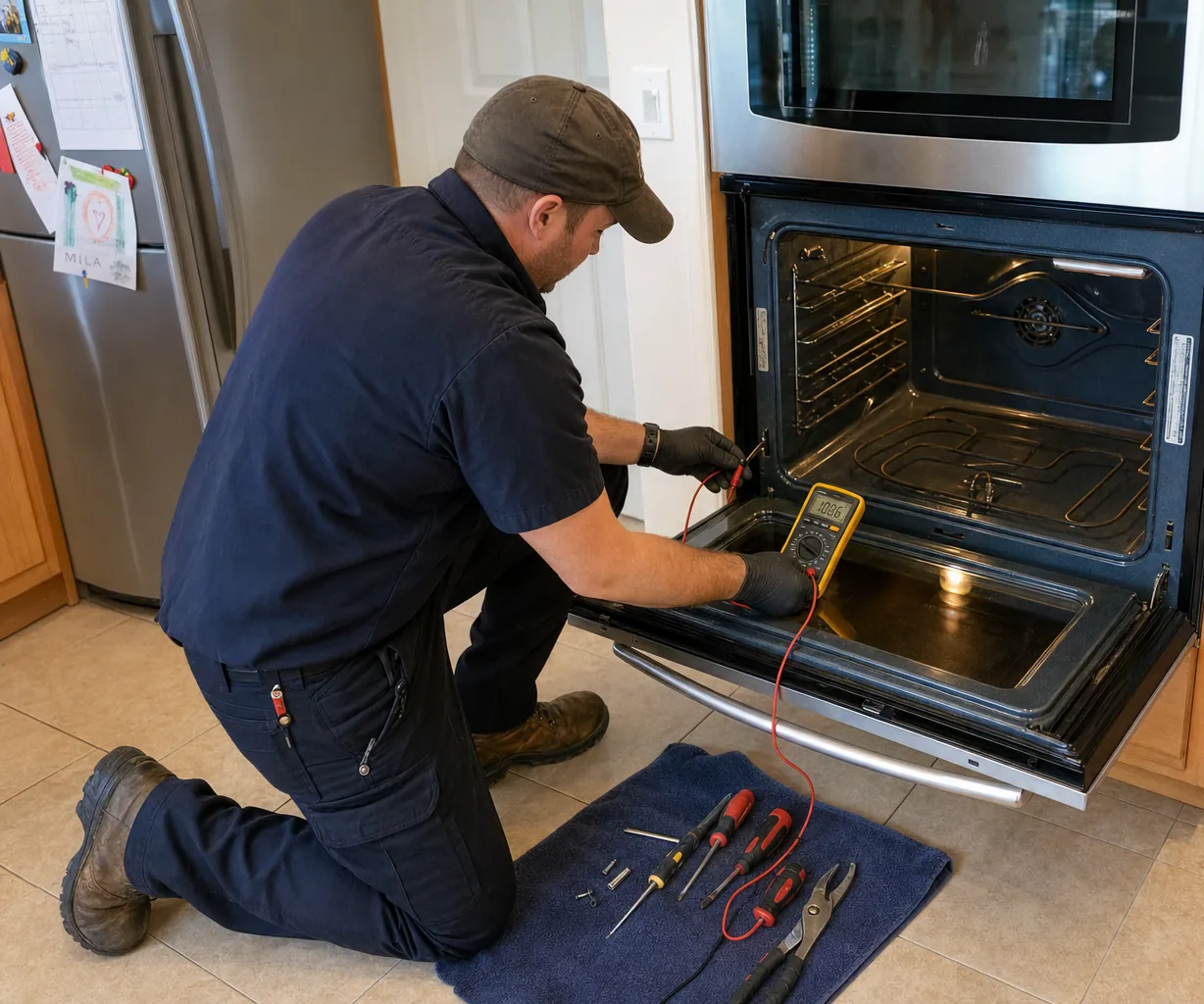
Wolf and Viking both build heavy, pro-style ranges that will serve a serious cook well, and the real differences are burner design, product lineup and service support rather than one brand simply being better. Choose Wolf if you want a cooking-only specialist that pairs with Sub-Zero refrigeration, choose Viking if you want one badge on the range and the refrigerator, and expect a typical repair on either to land in the same $250–$900 range.
Below is a side-by-side for owners who are buying, replacing or deciding whether to repair, with no brand bashing.
How do Wolf and Viking differ as companies?
Wolf is the cooking brand of the Sub-Zero Group, built in Wisconsin. It makes ranges, rangetops, cooktops, and wall, steam and convection ovens, and nothing else. Cold storage comes from its sister brand, Sub-Zero, which is why so many kitchens pair the two.
Viking, built in Greenwood, Mississippi, makes both cooking and refrigeration, so one Viking suite can cover the range, wall ovens, built-in refrigerator and wine storage. Viking is also known for a wide spread of color finishes, while Wolf’s signature look is stainless with red knobs.
Neither approach is better in the abstract: it comes down to a matched pair from two sibling brands versus a single badge across the kitchen.
How do the burners and ovens compare?
On the cooktop, Wolf uses dual-stacked sealed burners: an upper ring for high heat and a lower ring that holds a very low, steady simmer for sauces and melting chocolate. Viking’s pro ranges also use sealed burners with a dedicated low-simmer setting. Both brands put heavy cast-iron grates on top so you can slide pots from burner to burner, and both offer all-gas, dual-fuel and induction models, plus rangetops and cooktops for island installs.
In the oven, the bigger choice is fuel rather than brand. A dual-fuel range pairs gas burners with an electric convection oven, which bakes more evenly and holds temperature more tightly than an all-gas oven. Both brands build their dual-fuel ovens around convection fans and multiple cooking modes. An all-gas oven runs on a hot-surface igniter and gas valve, while a dual-fuel oven relies on bake and broil elements and a temperature sensor, and that difference decides which parts wear out years later.
The best test is hands-on: turn the knobs, open the oven door and lift the grates on both before you buy.
Which brand is more reliable?
There is no honest single answer, and any failure rate quoted for either brand is a guess. What a technician sees is that both brands wear out the same family of parts, and that age, installation and cleaning habits matter more than the badge on the backguard. These are the calls that come in for both:
| Symptom | Likely cause on Wolf or Viking | Typical repair range |
|---|---|---|
| Burner clicks but will not light | Clogged burner ports or a cracked igniter electrode | $200–$750 |
| Constant clicking after cleaning | Moisture in a spark switch or a failing spark module | $300–$650 |
| Oven slow to heat or will not bake | Weak oven igniter (gas) or failed bake element (dual fuel) | $250–$500 |
| Oven runs hot or cold | Temperature sensor or thermostat out of range | $280–$450 |
| Heat escaping around the door | Worn or torn door gasket | $150–$450 |
| Blank display or error codes | Control board or other electronics | $400–$850 |
These are typical ranges, not fixed prices. The firm quote is given on site after diagnosis, and the diagnostic visit ($95–$149) is credited toward the repair. Our repair pricing page lists the full set of bands.
Two habits prevent many of these calls: let spills dry before relighting a burner, since water in the igniter causes endless clicking, and keep the door gasket clean and unbent so heat stays inside the oven.
How do parts and service compare?
Both brands sell through dealer networks and keep parts for their current lines; for older ranges, some parts take longer to arrive on either. Wolf parts move through the Sub-Zero Group, Viking parts through its parent company, Middleby.
Before you call, note the model and serial number from the data tag, usually visible with the oven door open or behind the lower kick panel. If the range is still under the manufacturer’s warranty, contact the brand first. Out of warranty, an independent technician can work on either, and a solid pro range is usually worth repairing when the fault is a wear part such as an igniter, sensor or gasket.
Where does Thermador fit in Viking vs Wolf vs Thermador?
Thermador, a Bosch-family brand, is the usual third name on the shortlist. Its signature is a five-pointed burner shape that spreads the flame wider under the pan, plus a very low simmer setting. For service it behaves like the other two: igniters, spark modules, oven sensors and control boards are the usual repairs.
Does living near the water in Port Washington change anything?
Port Washington sits on Manhasset Bay, and homes in Manorhaven, Sands Point and Harbor Acres are close to salt water. Salt air is hard on any stainless range: over time it can pit the finish and corrode igniter tips and burner parts. Neither Wolf nor Viking is immune. Wipe stainless with the grain, dry burner caps after boil-overs, and run the hood while you cook so moist air does not settle on the controls.
How should you decide between them?
- Decide between one brand across the kitchen (Viking) and a cooking specialist paired with Sub-Zero (Wolf).
- Choose the fuel: dual fuel for baking, all-gas for simplicity, induction for speed.
- Confirm a dedicated 240-volt circuit for a dual-fuel or induction range.
- Size the hood for a pro range, which puts out far more heat than a standard one.
Frequently asked questions
Is Wolf better than Viking?
Neither is better across the board. Wolf suits cooks who want a cooking specialist with dual-stacked burners and a Sub-Zero pairing, while Viking suits buyers who want one brand for cooking and refrigeration.
Does Wolf make refrigerators?
No, Wolf makes cooking appliances only. Its matching refrigerators are made by its sister brand, Sub-Zero, while Viking makes both cooking and refrigeration.
Do Wolf and Viking repairs cost different amounts?
Not much, because both brands wear out the same kinds of parts. Typical range and oven repairs run $250–$900 on either, and the firm quote is given on site after diagnosis.
Who can repair a Wolf or Viking range in Port Washington?
An independent technician can service both brands. We are an independent service, not manufacturer-authorized, and you can reach us at (914) 483-3420.